[Article] Creativity, Care and the Rise of Social Prescribing
Originally published: February 5, 2026
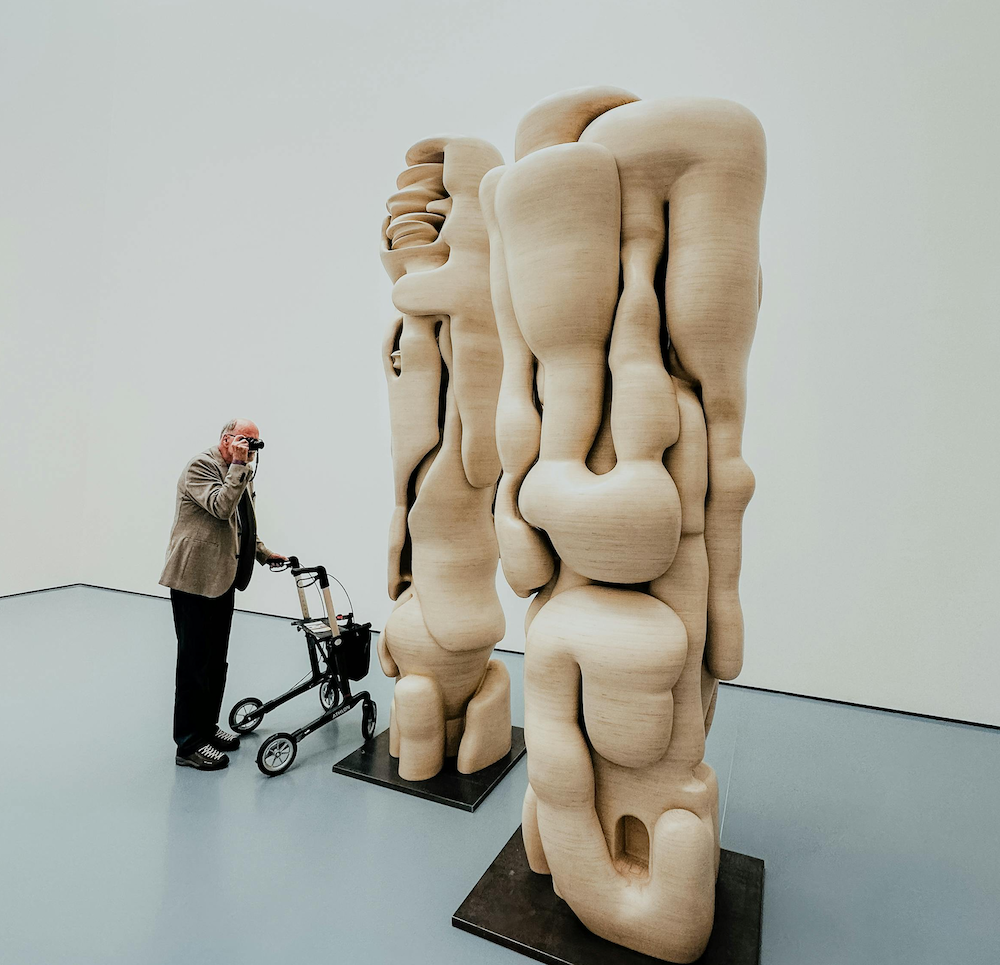
Healthcare often starts with the question, “What’s the matter with you?” Bringing the arts into care introduces another: “What matters to you?” The shift reflects a more holistic view of health—one the World Health Organization defines as “a state of complete physical, mental and social well-being.” Across Canada, arts organizations and care providers are increasingly putting this philosophy into practice, exploring how creativity and community can expand the reach and impact of the health system.
 A patient at Bruyère Health Élisabeth-Bruyère Hospital on the way to install ART-Bloomz, created with artist cj fleury as part of the Art Gallery of Ottawa’s Radical Connections program. Photo: cj fleury
A growing body of research is documenting the effects of arts engagement on health. A recent McGill University study led by Dr. Olivier Beauchet shows that older adults who participated in structured art activities during hospitalization experienced improved outcomes, including reduced medication use and lower in-hospital mortality. The Canadians’ Arts Participation, Health, and Well-Being report similarly finds that people involved in arts and culture are more likely to report better mental and overall health, as well as stronger community connections.
Arts organizations are translating this knowledge into thoughtfully designed programs. At the Art Gallery of Ottawa, Radical Connections brings together participants through guided art experiences designed to foster dialogue, reflection and emotional well-being. At the Art Gallery of Hamilton, Artful Moments offers facilitated sessions for people living with dementia alongside their care partners, creating a relaxed space for interaction, cognitive stimulation and shared enjoyment.
Performance-based programs are proving just as powerful. Calgary’s Inside Out Theatre offered Village Improv for Alzheimer’s to help people living with dementia maintain presence and dignity through improvisation. The Toronto Symphony Orchestra’s Art of Healing, in partnership with the Centre for Addiction and Mental Health, invites First Nations, Inuit and Métis patients to share stories and co‑create musical works as part of a culturally responsive wellness initiative. At the Opéra de Montréal, RESPIRER uses operatic breathing exercises to support recovery for people living with respiratory complications.
 The Toronto Symphony Orchestra Chamber Ensemble performing at the premiere of the first Art of Healing composition in 2023. Photo: Allan Cabral/Toronto Symphony Orchestra
Social prescribing puts art at the heart of healthcare
First developed in the United Kingdom in the 1990s, social prescribing has grown into a global movement. In Canada, the approach is gaining momentum, enabling physicians to recommend cultural activities as part of patient care.
In British Columbia, the BC Alliance for Arts and Culture has advanced the practice with Arts on Prescription (soon ArtX), a three-year research initiative completed in 2025. In partnership with organizations such as the Vancouver Symphony Orchestra and the Arts Club Theatre Company, the program connected patients to concerts, performances and local arts experiences, with participants reporting increased energy, stronger social connections and a greater sense of cultural identity.
Other Canadian institutions are also turning social prescribing into concrete experiences. In 2018, the Montreal Museum of Fine Arts partnered with Médecins francophones du Canada to launch a program allowing doctors to prescribe museum visits as a therapeutic complement to care. In 2025, the Orchestre symphonique de Montréal teamed with the same physician network to launch Music on Prescription, giving patients access to live concerts to boost their mental health and social connection.
At their core, these programs remind us that health is not just a medical process—it’s also emotional, cultural and deeply human.
The benefits of arts-based social prescribing aren’t just anecdotal—data shows they have measurable impacts, especially among youth and older adults. According to a recent report by the Canadian Institute for Social Prescribing, programs like these can reduce primary care visits by up to 42 percent and emergency department use by 24 percent, while generating an estimated return of $4.43 for every dollar invested. They are also associated with up to $296 million in potential annual savings through fall prevention alone. Together, these initiatives show that access to arts and culture can profoundly enhance health at multiple levels: individual, social and economic.
At their core, these programs remind us that health is not just a medical process—it’s also emotional, cultural and deeply human. As healthcare and art institutions continue to collaborate, the prescription pad is beginning to tell a new story—one that holds the promise of a fuller, more vibrant life.
-
Date
Feb 10, 2026
-
By
Canada Council for the Arts
Newsletter
Sign up for the Healthy Aging CORE Alberta e-news to keep up-to-date with activity from the platform and the Community-Based Seniors Services (CBSS) sector across the province.